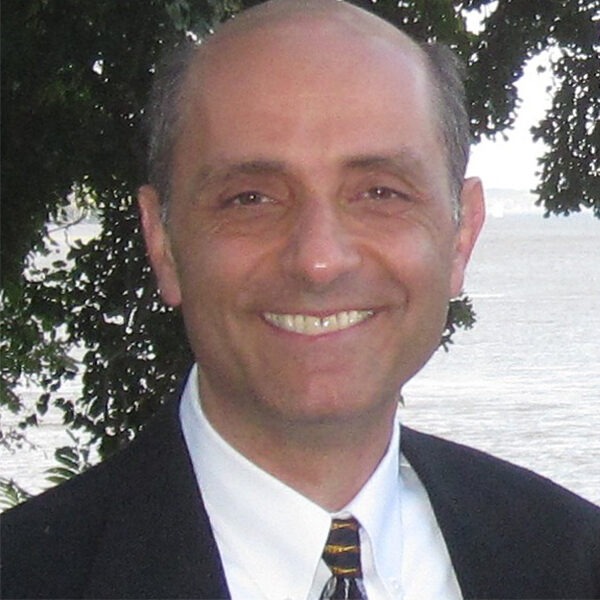
Dr. Fernanda Barros-Aragão (Speaker in person)

Date

Wednesday September 30, 2026
12:00 pm - 1:30 pm

Location

Abramsky Hall Rm 002
[Dr. Fernanda Barros-Aragao]

Speaker: Dr. Fernanda Barros-Aragão
Title: Neuroimmune interactions in cognitive aging and dementia

Abstract:
From Zika and COVID-19 to Alzheimer’s disease, this seminar will trace Dr. Fernanda Barros-Aragão’s research journey investigating how infections affect the brain across the lifespan. She will discuss the lasting impact of infection-induced inflammation on cognitive health and how these effects differ by age and sex. Finally, she will present her current work, collaboration opportunities, and future vision.

Affiliation: ºÚÁϳԹÏ×ÊÔ´, Centre for Neuroscience Studies, Department of Biomedical and Molecular Sciences

Google Calendar invite:

Dr. Caroline Landelle (Speaker in person)

Date

Wednesday September 23, 2026
12:00 pm - 1:30 pm

Location

Abramsky Hall Rm 002
[Dr. Caroline Landelle]

Speaker: Dr. Caroline Landelle
Title: Mapping the human spinal cord function with fMRI: from research to clinical application

Abstract:
In the past decades, magnetic resonance imaging (MRI) has greatly advanced our understanding of the structural organization of the human spinal cord, enabling the development of imaging biomarkers for spinal cord disorders. However, functional alterations can sometimes precede detectable structural damage, highlighting the need for advanced neuroimaging methods capable of mapping spinal cord functional organization across multiple segments simultaneously. In this presentation, I will provide an overview of the current state of spinal cord functional MRI, with particular emphasis on analytical approaches used to address fundamental and clinical research questions. Finally, I will discuss emerging clinical applications across different pathologies affecting the spinal cord. Together, this presentation will highlight how spinal cord functional MRI is becoming a crucial complement to structural imaging, offering new opportunities to detect early dysfunction, inform therapeutic interventions, and ultimately improve clinical assessment in spinal cord disorders.

Affiliation: The Neuro: Montreal Neurological Institute-Hospital, McGill University

Google Calendar invite:

Dr. Valeriya Gritsenko (Speaker in person)

Date

Wednesday September 16, 2026
12:00 pm - 1:30 pm

Location

Abramsky Hall Rm 002
[Dr. Valeriya Gritsenko]

Speaker: Dr. Valeriya Gritsenko
Title: From Force Prediction to Impedance Control: How the Nervous System Compensates for Gravity and Interaction Moments

Abstract:
Accurate movement requires more than producing the joint torques needed to move the limb. The nervous system must also stabilize a multijoint body whose segments mechanically interact and whose loading changes with gravity. This talk presents a unified neuromechanical framework in which motor commands combine predictive compensation for gravitational and intersegmental moments with the regulation of limb impedance. Experiments across normal and altered gravity show that static muscle activation and antagonist co-contraction change together with gravitational load, while phasic muscle activation drives motion with separate contributions to co-contraction. Experiments with TMS further show that corticospinal excitability anticipates resistive interaction moments and scales with the gravitational moments required during posture and reaching, supporting a descending contribution to both limb dynamics compensation and postural control. These results reveal why motor commands cannot be understood as a direct mapping from desired motion to muscle torque: co-contraction generates stiffness and damping that stabilize the limb but are invisible to inverse dynamics. Together, these findings support a dual control architecture that balances predictive force compensation with impedance regulation, allowing the nervous system to counteract resistive interaction moments, exploit gravity and assistive interaction moments, and maintain robust movement across changing mechanical environments.

Affiliation: West Virginia University, School of Medicine

Google Calendar invite:

Dr. Steven Scott (In Person)

Date

Wednesday April 8, 2026
12:00 pm - 1:00 pm

Location

Abramsky Hall Rm 002

Dr. Steven Scott


Speaker: Dr. Steven Scott

Title: How can multiple feedback pathways generate goal-directed motor actions?

Affiliation: Queen's University, Biomedical and Molecular Sciences

Zoom link: 

Dr. Maged Goubran (virtual)

Date

Wednesday April 1, 2026
12:00 pm - 1:00 pm

Location

Abramsky Hall Rm 002

Speaker: Dr. Maged Goubran (virtual)

Affiliation: University of Toronto, Dept. of Medical Biophysics

Zoom link:

Cultural Contingency Effect in Context Memory: From the Past to the Future

Date

Wednesday March 25, 2026
12:00 pm - 1:00 pm

Location

Abramsky Hall Rm 002

Speaker: Dr. Lixia Yang (virtual)

Affiliation: Toronto Metropolitan University, Dept. of Psychology

Zoom link:

Neural computation in the cerebellum

Date

Wednesday March 18, 2026
12:00 pm - 1:00 pm

Location

Abramsky Hall Rm 002

Reza Shadmehr

Speaker: Dr. Reza Shadmehr (in person, Connected Minds)

Affiliation: Johns Hopkins University, Dept. of Biomedical Engineering

Zoom link:

The interoceptive origins of reward

Date

Wednesday March 11, 2026
12:00 pm - 1:00 pm

Location

Abramsky Hall Rm 002

Affiliation: McGill University, Depts. of Neurology and Neurosurgery, Medicine, and Psychology 

Summary: Where do reward signals for food come from? In this lecture I will discuss findings from work in humans and in animals demonstrating that the value of food lies, not in the food itself, the pleasure it evokes or the nutrients it supplies to the body, but rather in the organism’s ability to transform nutrients into vital resources, such as cellular fuel. This information must then reach brain reward circuits to update the value of foods and support reinforcement learning so that both behaviour and metabolism can be optimized.  Experiments will be presented to outline the gut-brain circuits that underlie these processes, and to illustrate their role in perception, behavior and metabolism. Finally, we will consider how the modern food environment impacts gut-brain reinforcement and discuss potential implications for health.

Zoom link: 

Gavin Winston

Gavin Winston

Gavin Winston

Neurology

Medicine

Research interests: computational neuroimaging, machine learning, cognitive assessment, tractography, cognitive impairment, neurology, clinician, epilepsy